
Fire alarm systems designed to protect lives and pass inspection.
When the alarm has to work, there’s no second chance. The people inside are counting on it.
Acom designs and installs commercial fire alarm systems engineered to code, built to keep your people safe, and ready to pass inspection, so you protect what matters and stay compliant.
“Acom first assessed what we needed and what would work best, then installed the equipment and tested the entire system. Every technician was pleasant and professional, and the job was done quickly, efficiently, and at a fair price.”
Why businesses choose Acom
Request a free fire safety assessment
A local advisor will follow up within one business day.
Why businesses choose Acom
The plans were stamped. Nobody checked the building against them.
A stamp approves a drawing, not the system on your walls. A device moved during install can pass a walk-through and still miss the plans, and you're the one asked to sign off.
- Since 1973
- Fire, security and IT under one roof
- 24/7 central monitoring
Your system, start to finish
The same three steps Acom runs on every system we protect, written for what actually happens on a fire alarm project.
We walk the building and assess the risk.
Occupancy, layout, hazards, and code path. The device schedule comes out of the walk, not out of a catalog.
We engineer it, install it, and commission it.
Vetted equipment installed by certified technicians, phased to keep you occupied, then tested device by device before we call it done.
We monitor it and keep it compliant.
Central-station monitoring, inspection intervals on our calendar, and a service team that answers.
The parts of a complete fire alarm system
A code-compliant system combines detection, notification, and control into one coordinated design. Here’s how the major pieces work together.
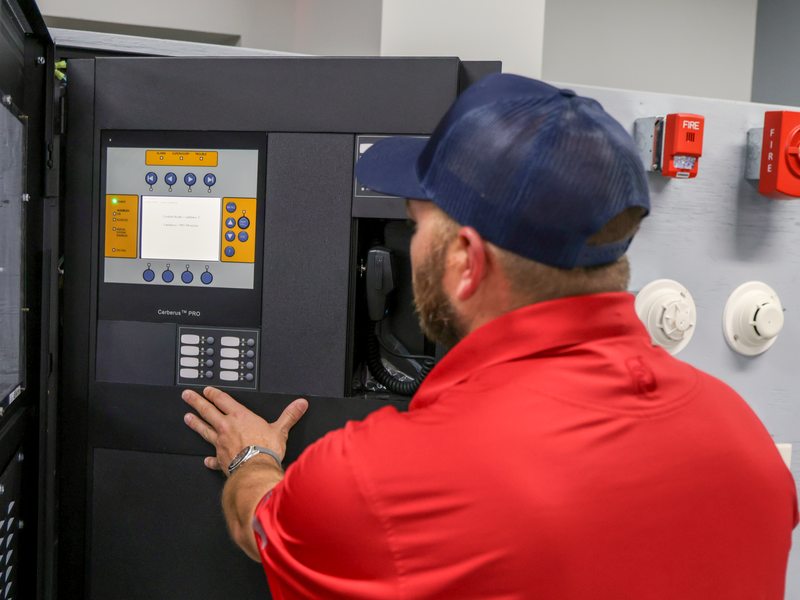
Control Panels
The brain of the system — addressable panels that pinpoint exactly which device alarmed, by room and zone.
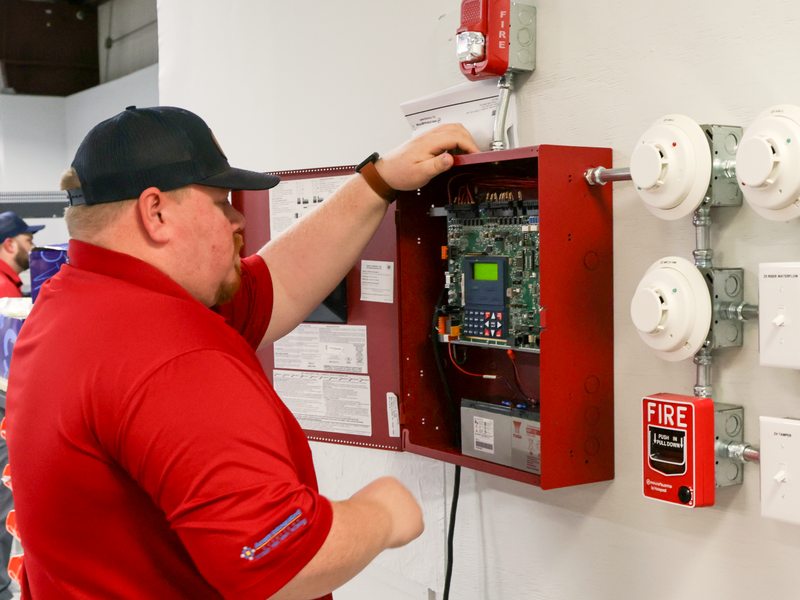
Smoke & Heat Detection
Detectors matched to each space — smoke, heat, or both — to catch a fire early and cut false alarms.
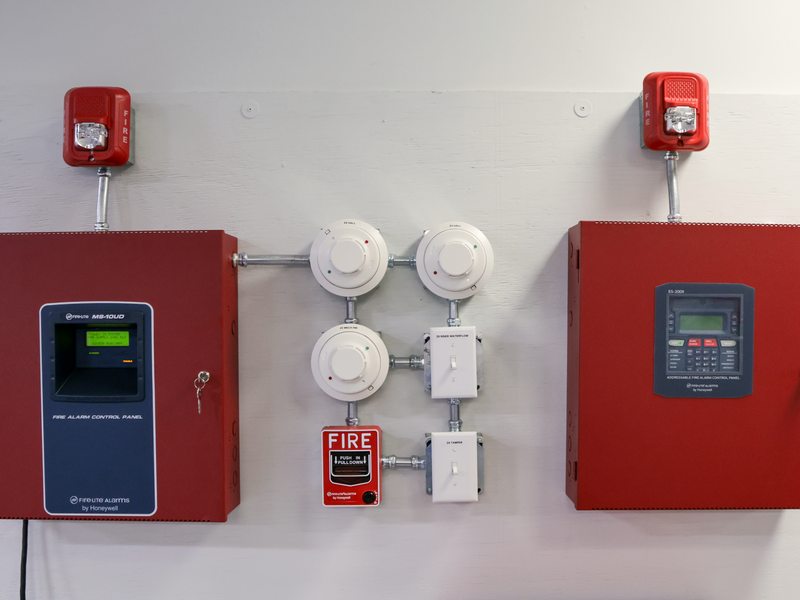
Notification Devices
Horns, strobes, and speakers placed to alert everyone — including those who can’t hear an alarm — and guide them out.
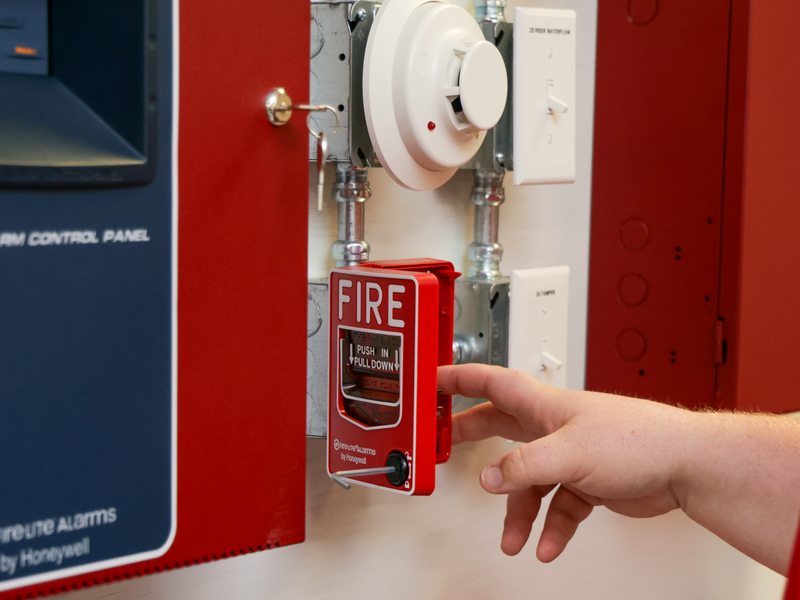
Manual Pull Stations
Code-placed pull stations at exits let anyone trigger the alarm the moment they see fire or smoke.
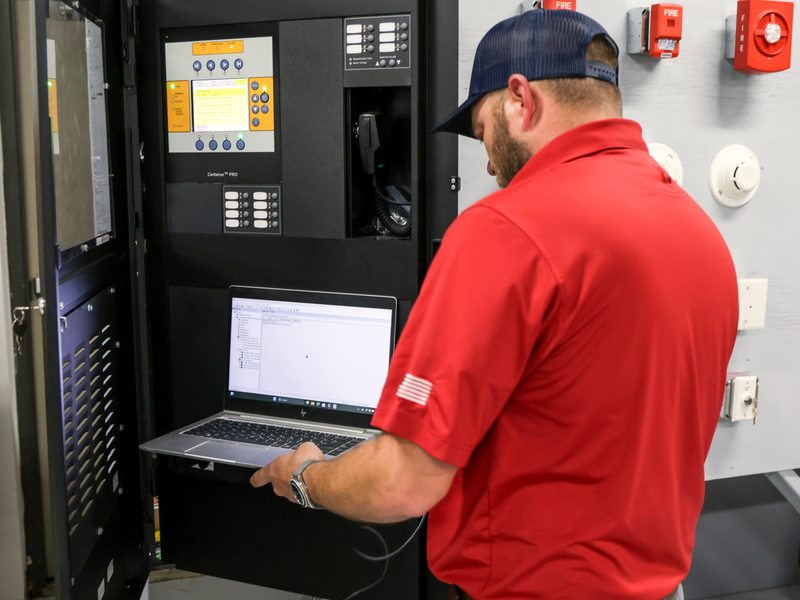
Building Integration
The system can unlock doors, recall elevators, and shut down HVAC automatically to slow smoke and speed escape.
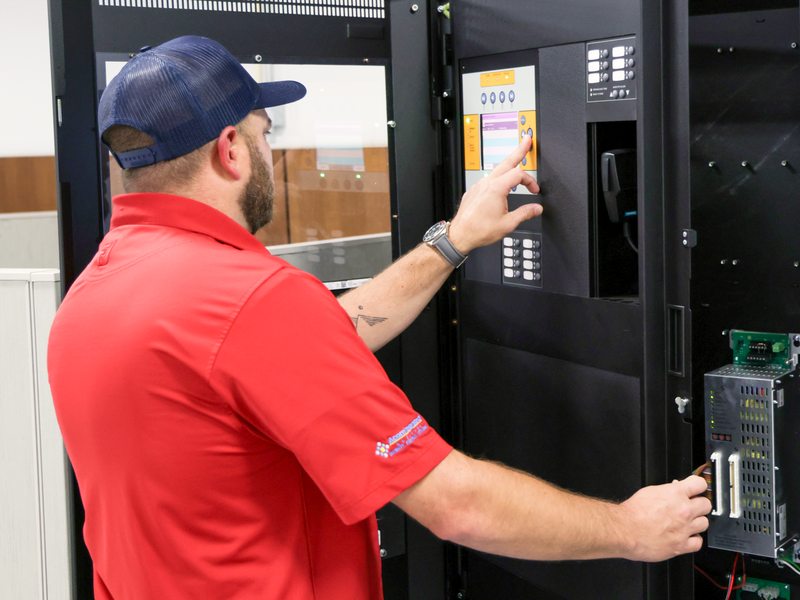
24/7 Fire Monitoring
Every alarm reports to a UL-listed central station that dispatches the fire department in seconds, day or night.
See how it fits with the rest of our fire and life safety services.
Engineered to code, built to pass inspection
A fire alarm system isn’t a product you buy off a shelf — it’s a life-safety system engineered to NFPA standards and your local authority having jurisdiction (AHJ). Acom designs, installs, and certifies the whole system so it protects people and clears inspection. Here is what the engagement looks like from first walk to final acceptance.
1
Survey & code review
We assess your occupancy type, square footage, and hazards, and confirm the applicable NFPA codes and AHJ requirements up front.
2
System design & engineered drawings
We produce stamped design drawings — device placement, circuits, and sequence of operation — sized for full, code-compliant coverage.
3
Permitting & AHJ submittals
We prepare and submit plans to the authority having jurisdiction and coordinate approvals so the project stays on schedule.
4
Installation by certified technicians
Trained technicians install panels, devices, and circuits to spec, with clean wiring and documentation an inspector can follow.
5
Acceptance testing & inspection
We test every device, walk the system with the AHJ, and deliver the as-builts and certificates that prove compliance.
6
Monitoring & ongoing ITM
We connect the system to 24/7 monitoring and keep it compliant with scheduled inspection, testing, and maintenance.
From a single tenant build-out to a multi-building enterprise campus, Acom designs and installs to the same code discipline — and stands behind it through inspection and the life of the system.
Questions business owners ask us
Cost depends on your building’s size and occupancy type, the number of devices the code requires, and how complex the wiring and integration are. After a free assessment, we give you a clear, itemized quote — no surprises.
That’s the whole point of how we design. We engineer to NFPA standards and your local authority having jurisdiction, prepare the permit submittals, and walk the system through acceptance testing — so it’s built to pass, not patched to pass.
It varies with building size and the permitting timeline in your jurisdiction. We map the schedule up front and coordinate with the AHJ so the fire system supports your opening date instead of holding it up.
Yes. We prepare and submit the engineered drawings to the authority having jurisdiction, coordinate approvals, and deliver the as-builts and certificates after acceptance — so the compliance trail is complete.
Yes. We connect your fire alarm to a UL-listed central station so that the moment an alarm trips, the fire department is dispatched automatically — day, night, weekend, or holiday.
Code requires regular inspection, testing, and maintenance, and we handle it. Acom keeps your system on a compliant schedule and documents every visit, so you’re always ready for the next inspection.
Often, yes. During the evaluation we review your existing panel and devices, identify what’s still compliant, and design an upgrade or takeover path — so you bring the system up to code without always starting from scratch.
Build it right the first time
Schedule a free, no-obligation site assessment. We’ll review your building, walk you through what code requires, and show you a path to a compliant system that protects everyone inside — no pressure to commit.
Fewer vendors. One accountable partner.
Most providers handle one piece. Acom designs and supports security, fire, and network, so the systems that protect your business actually work together. No finger-pointing, no gaps between providers.
- SecurityIntrusion detection, video surveillance, access control, automation & monitoring
- FireFire alarm design & install, sprinkler & suppression, inspection, testing & compliance
- NetworkManaged IT services, cybersecurity, backup & disaster recovery, VoIP & phone systems
One number for all three: (800) 323-2266
Talk to One Acom
A local advisor will follow up within one business day.