
Kitchen suppression systems built for the fire your hood is most likely to see
We know a grease fire can shut down your kitchen, and your revenue, in the time it takes to call 911.
Acom designs and installs UL 300-compliant wet chemical suppression systems engineered for your specific hood, appliances, and cooking line.
“Mike and Donnie were very professional and knowledgeable. They answered all our questions and were patient explaining the new technology and how it works. You want these two doing your install.”
Why businesses choose Acom
Request a free fire safety assessment
A local advisor will follow up within one business day.
Why businesses choose Acom
The fryer moved three feet. The nozzle above it didn't.
Hood suppression is laid out for one cooking line. Swap a griddle, add a fryer or shift the line, and the nozzles keep aiming at the old spots. That can fail an inspection and keep your kitchen closed.
- NFPA 96 · UL 300 compliant
- State licensed
- Since 1973
Your system, start to finish
The same three steps Acom runs on every system we protect, written for what actually happens on a hood suppression installation.
We measure the line as it stands today.
Appliance types and positions, hood dimensions, duct runs, and fuel sources. The design comes off the measurements, not the old drawing.
We install and test the whole chain.
Nozzles, detection line, manual pull, and the fuel shutoff, installed by our own technicians and tested end to end.
We inspect twice a year and catch the changes.
Documentation your fire marshal and your health inspector will both accept, and a recheck of coverage whenever the line moves.
Coverage engineered for your exact cooking line
Every hood, appliance lineup, and kitchen layout calls for a different suppression design.
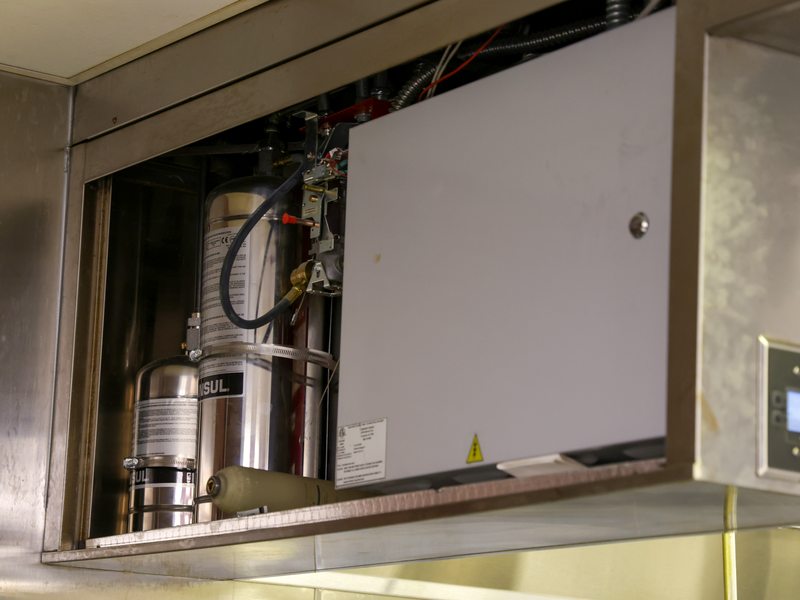
Wet Chemical Systems
UL 300-compliant suppression for modern high-efficiency fryers and grills.
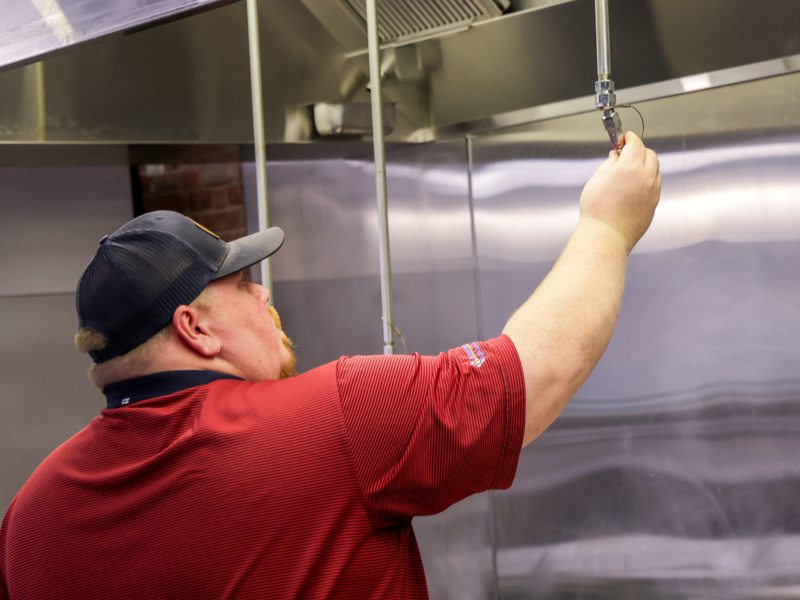
Appliance-Specific Nozzle Design
Coverage engineered to your exact fryers, griddles, and range, not a generic layout.
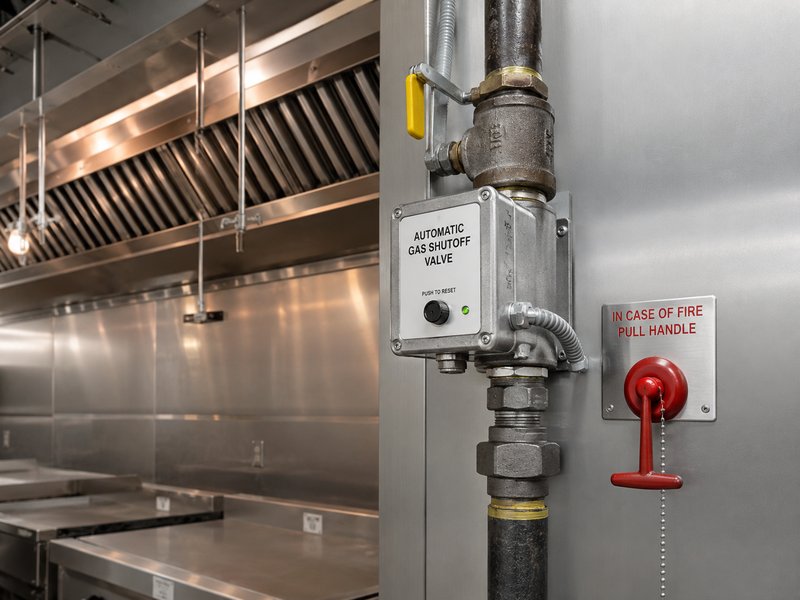
Automatic Fuel & Gas Shutoff
Suppression trips the gas and electric shutoff automatically, cutting the fuel source instantly.
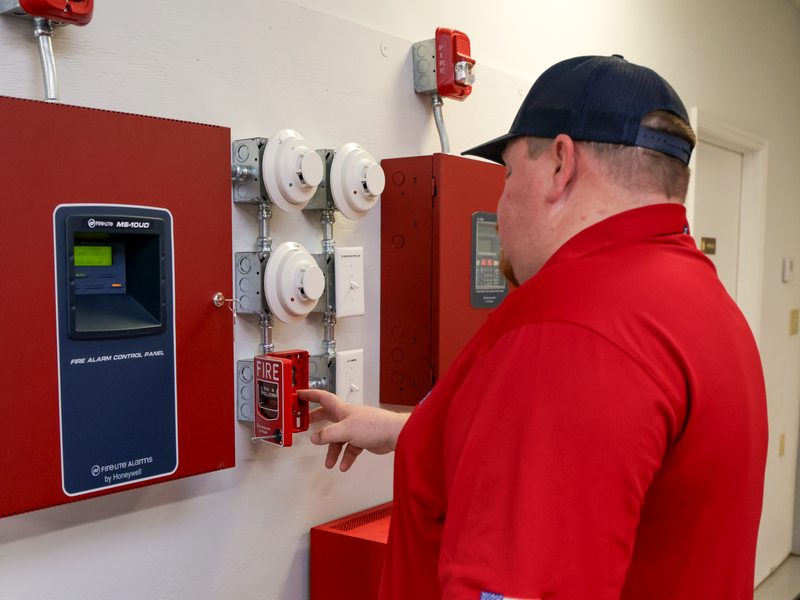
Manual Pull Station Backup
A manual activation point staff can trigger if they spot a fire before the system does.
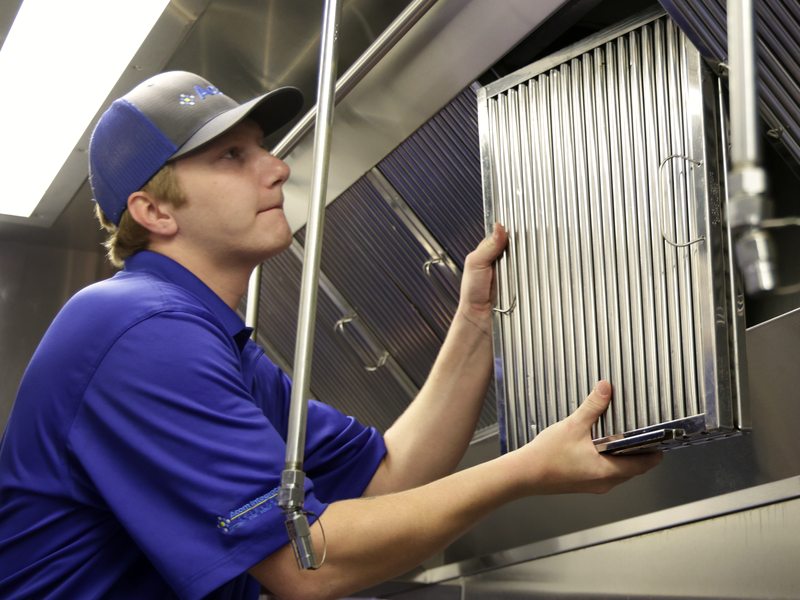
Hood & Duct Coordination
Suppression coverage coordinated with your hood and duct system for full compliance.
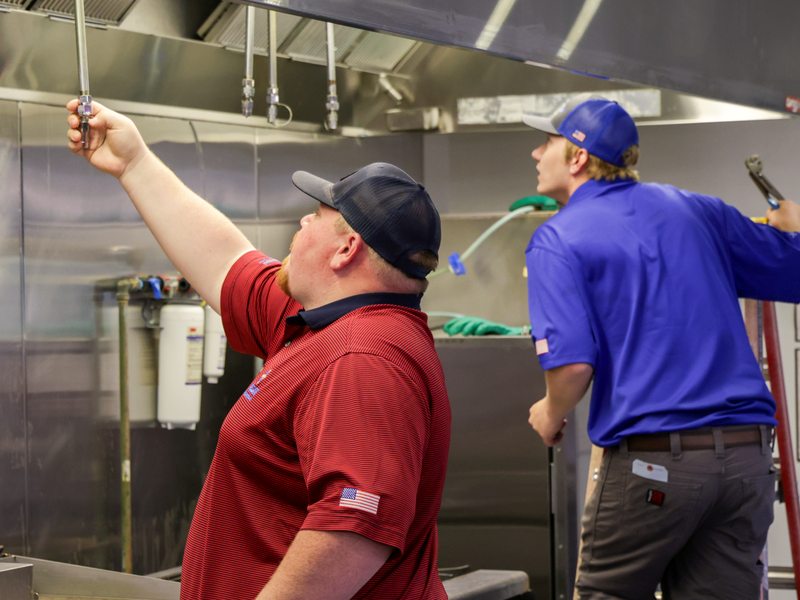
Multi-Line Kitchen Design
Layouts for kitchens with multiple cooking lines, islands, or shared hood systems.
See how it fits with the rest of our fire and life safety services.
Engineered to your line, built to pass inspection
A suppression system is only as good as its fit to your cooking line. We measure your actual appliances and airflow, then design nozzle placement and chemical coverage around them, not a boilerplate kit.
Kitchen walk & appliance inventory
We document every fryer, griddle, range, and hood section to map the exact hazard the system needs to cover.
Nozzle & coverage design
Nozzle placement and chemical coverage engineered to NFPA 96 and UL 300 for your specific appliance lineup.
Permitting & AHJ coordination
We prepare and submit drawings to your fire marshal and coordinate with health department requirements.
Installation & shutoff integration
Certified technicians install the system and integrate automatic gas and electric shutoff with your equipment.
Discharge testing & acceptance
Every system is function-tested before we call it complete, confirming nozzles, shutoff, and manual pull station all perform together.
Ongoing inspection & recharge
Once it’s live, our Inspection & Maintenance team keeps it certified with the semi-annual service NFPA 96 requires.
From a single food-truck-style line to full-service multi-line commercial kitchens.
Questions restaurant and kitchen owners ask us
A grease fire does not wait for your next inspection
Get a free assessment of your kitchen suppression coverage from Georgia’s only integrated fire, security, and network provider.
Fewer vendors. One accountable partner.
Most providers handle one piece. Acom designs and supports security, fire, and network, so the systems that protect your business actually work together. No finger-pointing, no gaps between providers.
- SecurityIntrusion detection, video surveillance, access control, automation & monitoring
- FireFire alarm design & install, sprinkler & suppression, inspection, testing & compliance
- NetworkManaged IT services, cybersecurity, backup & disaster recovery, VoIP & phone systems
One number for all three: (800) 323-2266
Talk to One Acom
A local advisor will follow up within one business day.