
Fire hydrant flow testing that proves the water is there.
A hydrant can look perfectly fine and still not deliver the water the fire department needs to save your building.
Acom flow-tests the private fire hydrants on your property to NFPA 25, measures the flow and pressure they actually deliver, and documents every result, so when firefighters connect, the water is there.
Very prompt and professional at all times. Our technician, Brian B, is extremely helpful. I’d recommend Acom for all your security needs.
Why businesses choose Acom
Request a free fire safety assessment
A local advisor will follow up within one business day.
Why businesses choose Acom
The hydrant out back looks ready. The valve feeding it was never reopened.
A private hydrant on your property is yours to test, not the city's. A valve closed during street work or a drop in flow won't show from the curb. It shows on inspection day.
- Tested to NFPA 25
- Fire, security and IT under one roof
- Since 1973
Your test, start to finish
The same three steps Acom runs on every system we protect, written for what actually happens on a hydrant flow test.
We locate your hydrants and pull the history.
Which hydrants are yours, where the mains run, and what the last recorded flow was, if there is one.
We flow them and measure what they actually deliver.
Static and residual pressure, pitot readings, and full operation of each hydrant. If one underperforms, you get the numbers and a plain description of what it needs.
We document the numbers and hold your date.
A dated flow report you can hand to the fire marshal or your sprinkler designer, and the next test on our calendar.
What we test and document
A private hydrant has to deliver real flow at real pressure, and a visual check can’t tell you whether it will. Here’s what our testing covers.
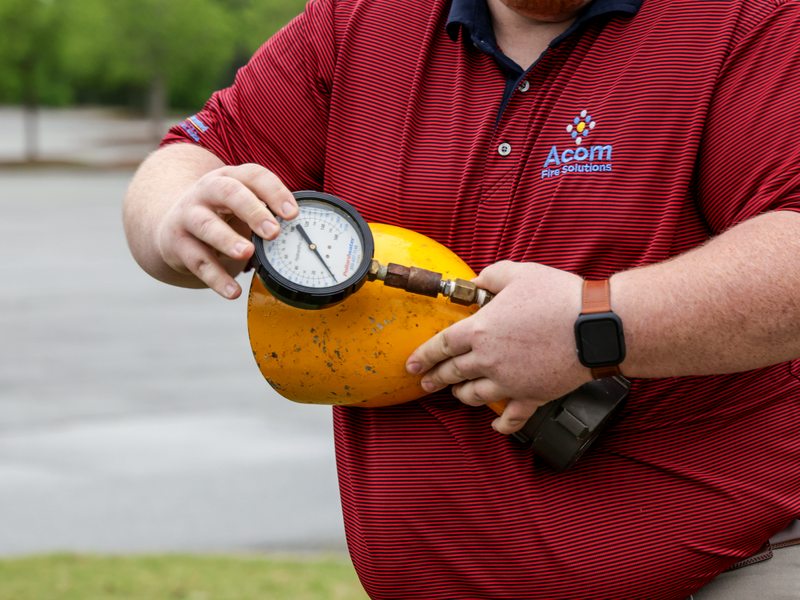
Flow & Pressure Test
We measure the actual gallons-per-minute and pressure each hydrant delivers — not just whether water comes out.
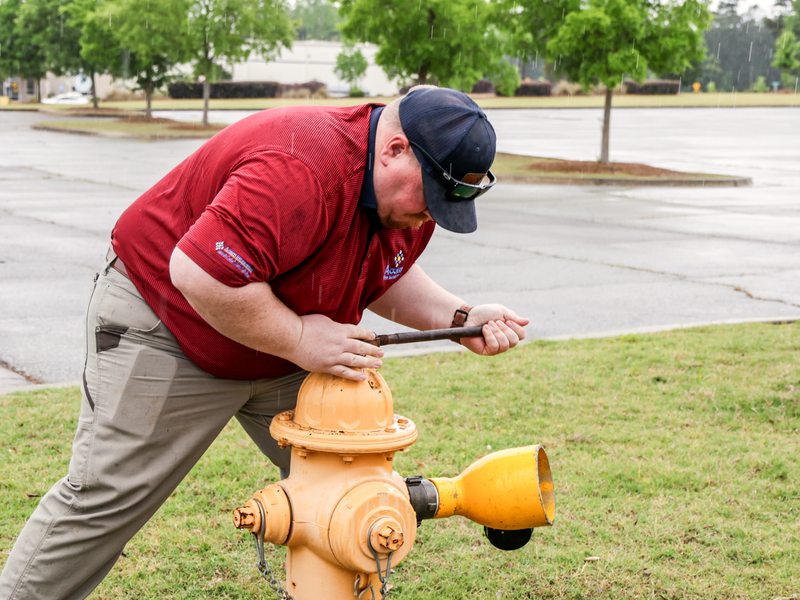
Valve & Cap Operation
We open and close the main valve and outlet caps to confirm a hydrant the fire department can actually use under pressure.
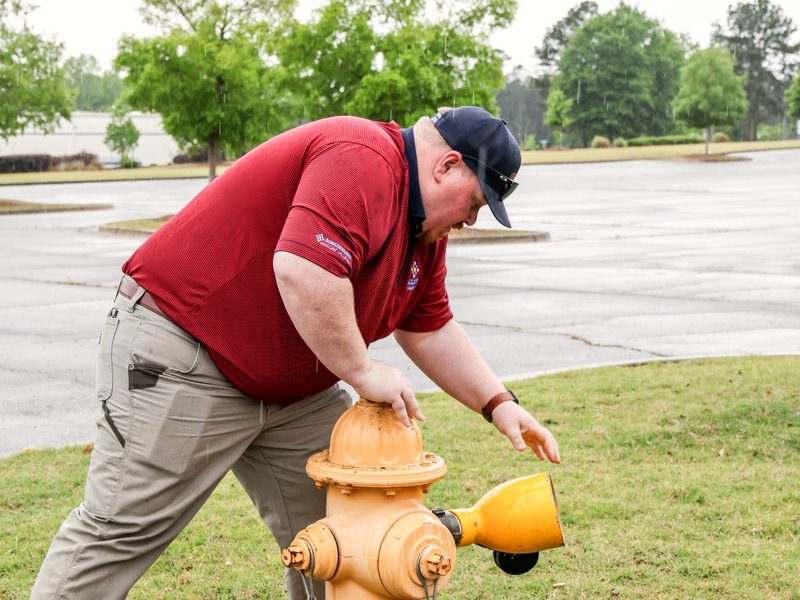
Visual & Condition Check
We check each hydrant for damage, leaks, corrosion, and clear access so nothing blocks it when crews arrive.
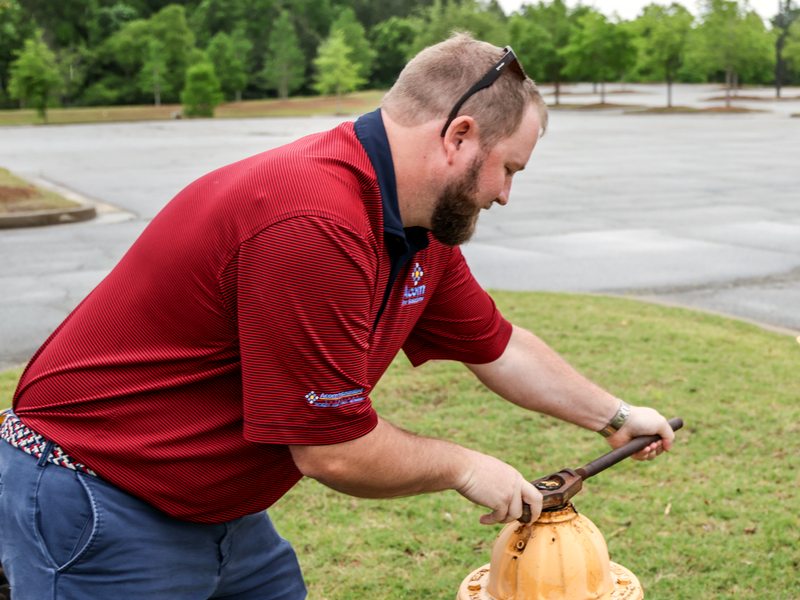
Repair & Restore
When a hydrant is seized, leaking, or low, we repair it and restore full flow so it’s ready before the next emergency.
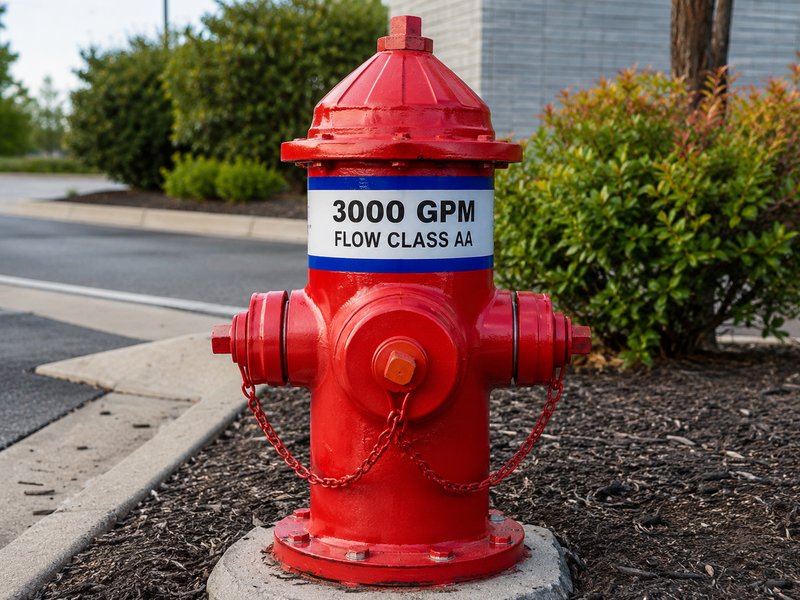
Flow Marking
We can color-code hydrants by capacity so responders see at a glance how much water each one delivers.

Documentation & Reporting
You get a complete, dated NFPA 25 report with each hydrant’s flow figures for the fire marshal and your records.
See how it fits with the rest of our fire and life safety services.
How a thorough inspection works
A private hydrant is your property’s responsibility, not the city’s — and NFPA 25 calls for it to be flow-tested so you know the gallons-per-minute and pressure it actually delivers. A hydrant that turns but barely flows is a false sense of security. Here is how Acom runs the testing from arrival to report.
Hydrant inventory & access
We locate every private hydrant on your property and confirm each is accessible and clear for testing and for crews.
Visual & condition check
We inspect for damage, leaks, corrosion, and seized parts before we ever open a valve under pressure.
Flow & pressure test
We flow each hydrant with gauges to measure static and residual pressure and the gallons-per-minute it delivers.
Repair & restore
We free seized valves, address leaks, and restore caps and outlets so every hydrant performs and operates as it should.
Flow marking
Where you want it, we color-code each hydrant by capacity so responders can read its flow at a glance.
Documentation & scheduling
We deliver an NFPA 25 report with each hydrant’s figures and set the next test so you never miss the interval.
From a single private hydrant to dozens across a multi-building enterprise campus, Acom tests, repairs, and documents every one to the same code discipline — and keeps the records that prove it.
Questions business owners ask us
NFPA 25 calls for private hydrants to be flow-tested annually and inspected more frequently. Your authority having jurisdiction may set its own interval. We confirm the requirement for your property and keep you on schedule.
Hydrants on a public street are. But private hydrants on your property — common on campuses, industrial sites, and large commercial lots — are yours to maintain and test, even though the fire department relies on them in an emergency.
We measure the static and residual pressure and the gallons-per-minute the hydrant delivers under flow. Those numbers tell the fire department how much water they can count on — something a quick look at a standing hydrant can’t reveal.
We diagnose the cause — a seized valve, a leak, a partially closed supply, or an obstruction — and repair and retest it to restore full flow. You end up with a working hydrant and documented numbers.
Flow testing releases water briefly and we manage the discharge so it drains safely. We schedule around your operation and coordinate with you so there’s no surprise to staff or traffic on the property.
Yes. You get a complete, dated NFPA 25 report with each hydrant’s flow and pressure figures — the record the fire marshal looks for and the data the fire department uses for pre-planning.
Yes — and it’s where one provider pays off. Acom can test your hydrants, sprinkler system, backflow assemblies, and fire alarm together, so your whole water-based fire protection stays compliant on one coordinated schedule.
Know your hydrants will deliver
Schedule a hydrant flow test. We’ll measure the flow and pressure on every private hydrant to NFPA 25, repair what’s failing, and document the numbers your fire department needs.
Fewer vendors. One accountable partner.
Most providers handle one piece. Acom designs and supports security, fire, and network, so the systems that protect your business actually work together. No finger-pointing, no gaps between providers.
- SecurityIntrusion detection, video surveillance, access control, automation & monitoring
- FireFire alarm design & install, sprinkler & suppression, inspection, testing & compliance
- NetworkManaged IT services, cybersecurity, backup & disaster recovery, VoIP & phone systems
One number for all three: (800) 323-2266
Talk to One Acom
A local advisor will follow up within one business day.