
Kitchen hood suppression inspection that keeps your line running.
A grease fire over a hot line moves in seconds — and a failed hood inspection can close your kitchen for days.
Acom inspects and services your kitchen hood suppression system to NFPA 96 and UL 300, tags it for the fire marshal and your insurer, and keeps it ready — so a flare-up stays at the cookline and your doors stay open.
Best response times in the country.
The tag over your hood says the system is ready. That is not the same as it firing.
A tag over the hood cannot see inside the nozzles. Grease coats the nozzles the agent has to spray through, and the tag still reads current.
If the system fired tonight, would the gas to your burners actually shut off?
The suppression agent is only half of it.
Your kitchen runs hot every night, and the system above it only gets one chance. We keep it ready so your crew can cook.
Your inspection, start to finish
The same three steps Acom runs on every system we protect, written for what actually happens on a hood suppression inspection.
We review the system and the line beneath it.
System type, nozzle layout, appliance positions, and whether the coverage still matches what you cook on today.
We test it, then fix what fails.
Nozzles, fusible links, detection line, manual pull, and the fuel shutoff. Anything out of code gets flagged, and our technicians can repair or replace it.
We tag it and hold your six months.
Documentation your fire marshal and your health inspector will both accept, and the next semi-annual already scheduled.
What we check and service
NFPA 96 covers the whole kitchen fire system — not just the tank on the wall. Here’s what a complete inspection covers.
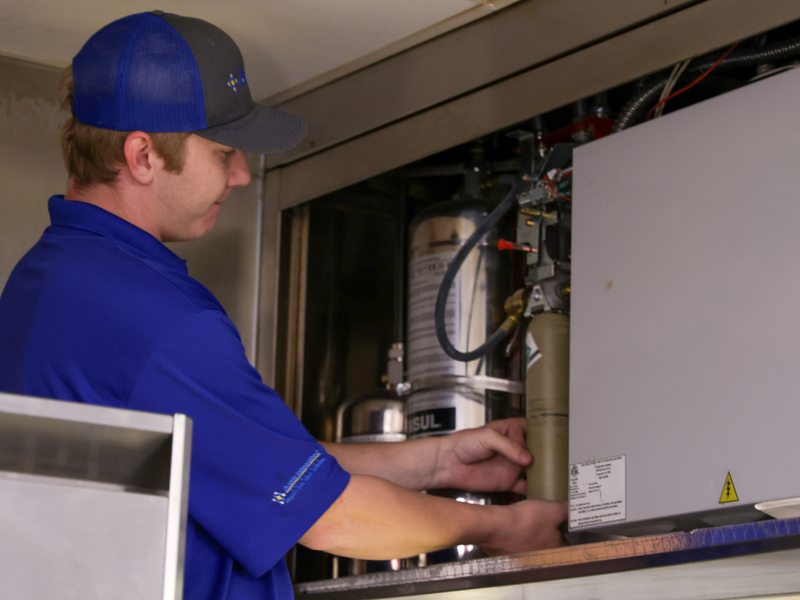
Wet-Chemical System
We check the agent tank, gauge, and cartridge so the system holds the charge it needs to fire when triggered.
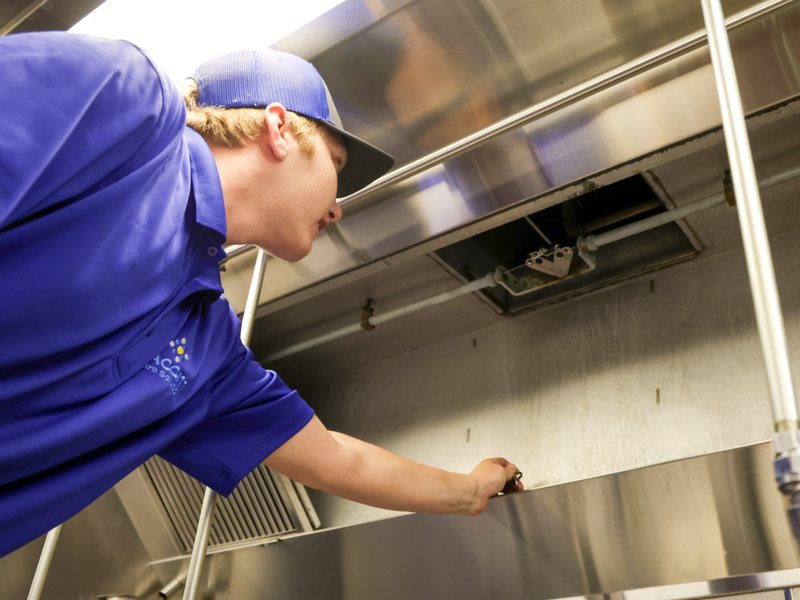
Nozzles & Coverage
We confirm every nozzle is aimed, capped, and positioned to cover the appliances actually under the hood.
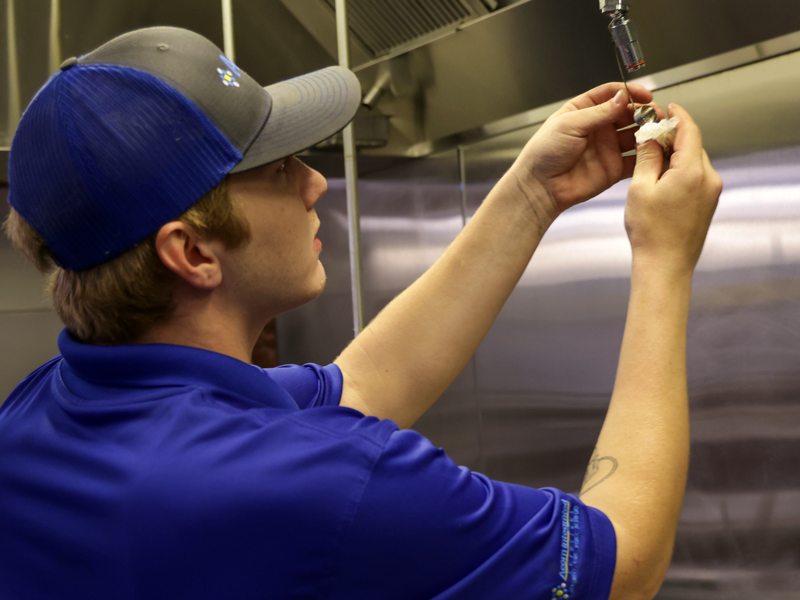
Detection & Fusible Links
We replace fusible links on schedule and confirm the detection line will release the system in a fire.
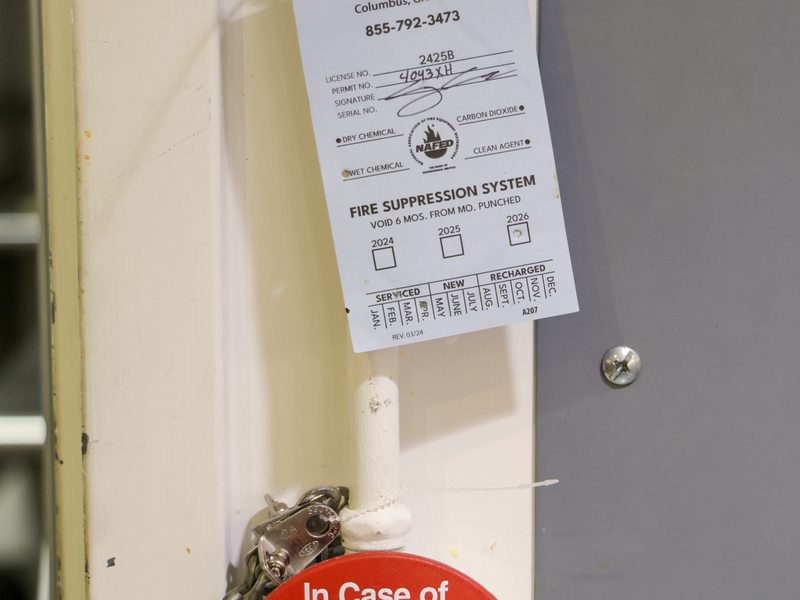
Manual Pull & Gas Shutoff
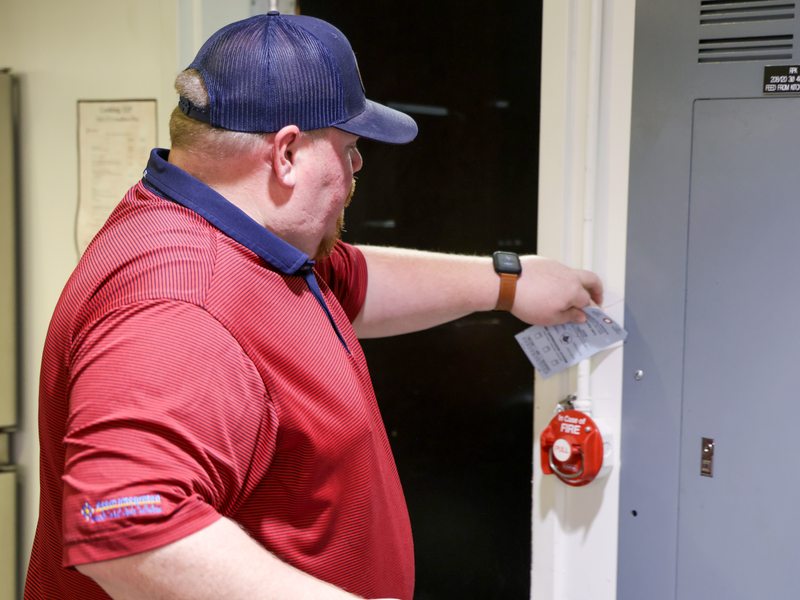
We test the manual release and confirm the system shuts off gas or power to the appliances when it activates.
UL 300 Compliance
We confirm your system meets the UL 300 standard required for today’s high-efficiency cooking equipment.
Documentation & Reporting
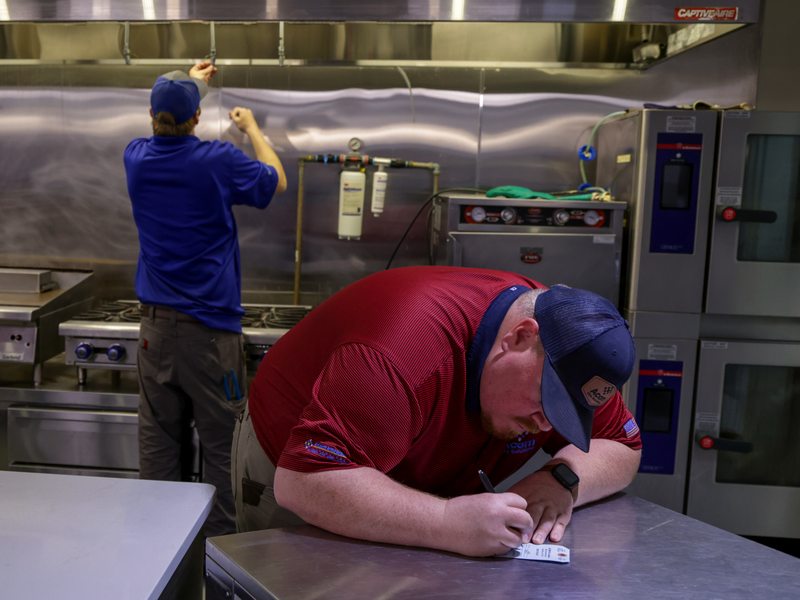
You get a complete, dated NFPA 96 report and tag that satisfy the fire marshal, your insurer, and the health inspector.
How a thorough inspection works
NFPA 96 requires a commercial kitchen suppression system to be inspected by a qualified technician twice a year — and it has to actually release agent, shut off the fuel, and cover every appliance to do its job. It’s not a glance and a new tag. Here is how Acom runs a hood inspection from arrival to report.
System & appliance review
We confirm the system matches the cookline beneath it — appliances move, and coverage has to move with them.
Tank, gauge & cartridge check
We verify the wet-chemical tank, pressure, and cartridge so the system can actually discharge when triggered.
Nozzle & detection inspection
We check nozzle aim and caps and replace fusible links so detection releases the system the moment it should.
Function & shutoff test
We test the manual pull and confirm the system shuts off gas or power to the appliances on activation.
UL 300 & deficiency review
We verify UL 300 compliance and flag anything failing or out of code, correcting what we can on the visit.
Tagging, documentation & scheduling
We tag the system, deliver an AHJ-ready report, and set your next semiannual service so you never miss it.
From a single restaurant cookline to a multi-location enterprise kitchen operation, Acom services every hood system to the same code discipline — and keeps the documentation that proves it.
Questions business owners ask us
NFPA 96 requires a professional inspection of the suppression system every six months. Many jurisdictions and insurers enforce that semiannual schedule strictly, and we keep you on it automatically.
UL 300 is the standard for kitchen suppression built around today’s high-efficiency cooking equipment and vegetable-oil fryers. Older, pre–UL 300 dry-chemical systems are no longer compliant. We check your system and tell you exactly where it stands.
We check the wet-chemical tank and cartridge, inspect and aim the nozzles, replace fusible links, test the manual pull and the gas or power shutoff, and confirm coverage over every appliance — then tag and document the system.
No — they’re separate. Hood and duct cleaning removes grease buildup; this inspection services the suppression system that puts out a fire. Both are required under NFPA 96, and we focus on the suppression side that keeps you protected.
Moving or swapping appliances can leave nozzles aimed at empty space, which fails inspection and leaves gaps in coverage. Tell us about any line changes and we’ll re-aim or add nozzles so the system matches your kitchen.
Yes. We tag the system and provide a dated NFPA 96 report that meets your authority having jurisdiction’s requirements — the record the fire marshal, your insurer, and the health inspector look for.
A lapsed hood tag is one of the fastest ways to get a kitchen shut down, and it can void coverage if a fire happens. We put you on a tracked semiannual schedule and remind you ahead of each due date so it never slips.
Keep your kitchen open and compliant
Schedule a hood suppression inspection. We’ll service your system to NFPA 96 and UL 300, confirm full coverage over your line, and hand you the documentation the fire marshal and your insurer require.
One partner for security, fire, and network
Most providers handle one piece. Acom designs and supports all three — so the systems that protect your business actually work together.
Security
Protect people and property with integrated systems.
- Intrusion detection
- Video surveillance
- Access control
- Automation & monitoring
Fire
Stay safe and compliant with full life-safety coverage.
- Fire alarm design & install
- Sprinkler & suppression
- Inspection & maintenance
- Testing & compliance
Network
Keep operations running with secure IT infrastructure.
- Managed IT services
- Cybersecurity
- Backup & disaster recovery
- VoIP & phone systems
Fewer vendors. One accountable partner.
When your security, fire, and network systems come from one team, there’s no finger-pointing and no gaps between providers. You get unified support, systems that integrate cleanly, and one number to call when it matters — backed by the same responsive team for the life of every system.